
Hands-Away Woodworking Safety Planner
This tool helps you decide when to use push sticks, push blocks, clamps, or simple jigs — so your hands guide the work instead of restraining it.
One of the most effective ways to reduce woodworking injuries is simple: keep your hands farther away from blades and cutting paths. The goal isn’t perfection — it’s building habits that give you time to react when something shifts.
Answer a few questions below and you’ll get a practical “hands-away” plan you can follow without overthinking.
This decides which supports reduce hand exposure the most.
If grip is limited, the tool recommends clamping first.
Your Hands-Away Plan
No tool eliminates risk. These supports reduce exposure and improve control when a piece shifts or binds.
Recommended Supports
Simple Habits That Help
Quick Reminder
Disclaimer: This tool provides general safety guidance and does not replace professional training or manufacturer instructions. If control, vision, or steadiness feels compromised, pause and simplify the task.
Powered by 60AndOver.net
Hands-Away Woodworking Safety Planner
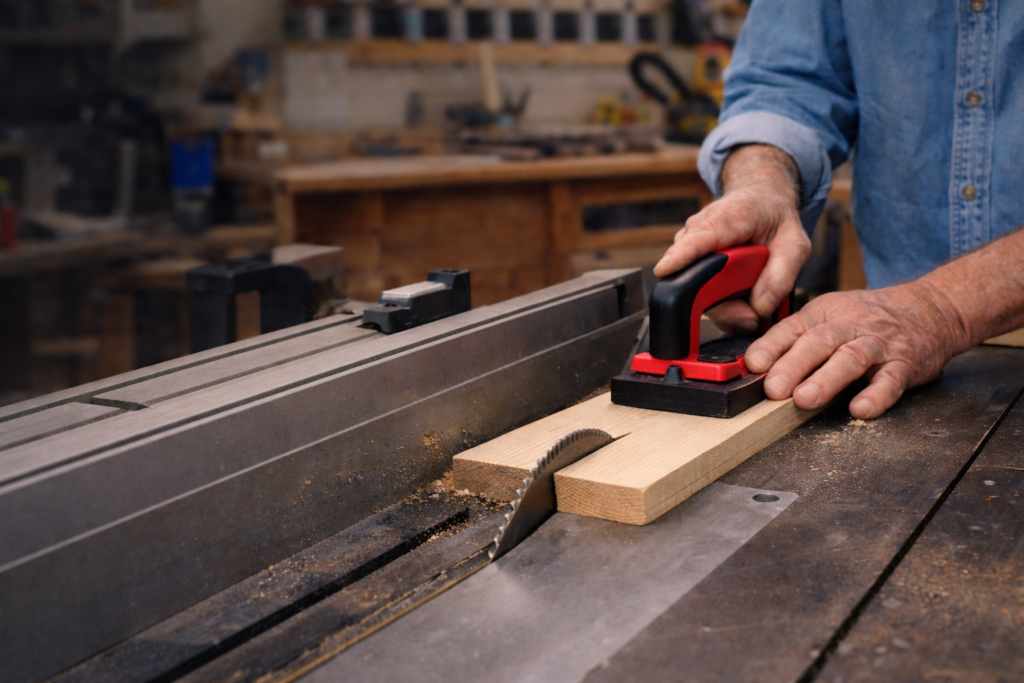
Woodworking injuries often happen not because someone “did something wrong,” but because hands drift closer to blades, bits, or cutting paths as a task progresses.
This tool is designed to help you plan distance before you start.
Instead of focusing on speed, power, or productivity, the Hands-Away Woodworking Safety Planner helps you think through supports and habits that keep hands farther away from danger zones, especially when grip strength, reaction time, or comfort varies from day to day.
No woodworking tool eliminates risk entirely. What does change is how much margin for error your setup allows.
This planner looks at:
- The type of task you’re doing
- How stable or awkward the workpiece is
- How your hands feel today
- How close your hands would normally be
Based on those inputs, the tool suggests practical supports and habits that many experienced woodworkers rely on to reduce exposure and injury severity.
What This Tool Helps With
This tool is designed to help you:
- Identify when push sticks, push blocks, clamps, or simple jigs should be used
- Reduce the chance of hands drifting closer during a cut
- Build repeatable habits that support control and predictability
- Adjust your setup when comfort, grip, or steadiness feels limited
It does not recommend specific brands or products. The goal is safer decision-making, not shopping.
Important Perspective
No woodworking setup is risk-free.
However, choosing supports that:
- Increase distance
- Improve stability
- Reduce the need for grip force
can significantly lower the severity of injuries when something doesn’t go exactly as planned.
This tool is meant to support thoughtful preparation, not replace experience, training, or manufacturer guidance.
Frequently Asked Questions.
Are push sticks and clamps really that important?
Yes. Increasing the distance between hands and cutting paths is one of the most effective ways to reduce injury severity in woodworking.
Does this tool recommend specific tools or brands?
No. This planner focuses on categories of supports and habits rather than specific products.
Is this tool suitable if I already have woodworking experience?
Yes. Many experienced woodworkers use similar mental checklists before starting a task, especially with small or awkward pieces.
What if my hands feel less steady on some days?
That’s exactly when this tool is most useful. It encourages relying on clamping and supports rather than grip strength.
Does using more supports slow me down?
Sometimes slightly — but most injuries happen during “quick” cuts. A slower setup often results in safer, more consistent work.
If you’d like more context behind these recommendations, we explain how many seniors choose lower-risk tools and setups in our woodworking safety guides.
Read: Lower-Risk Woodworking Tools Seniors Commonly Use
Read: Safe Woodworking Tools for Seniors (Risk-Reduction Guide)
Disclosure: As an Amazon Associate, we earn from qualifying purchases at no extra cost to you.