

Digital Body Weight Scale
- Large, easy-to-read display
- Helpful for tracking weight trends
- Useful with BMI tracking
Enter your height and weight to estimate your BMI, review general adult BMI categories, and understand what your result may mean for women over 60.
Calculate My BMIEnter height and weight
Review your BMI
Understand your range
Your BMI estimate falls within the general healthy adult range. BMI is a screening tool and does not directly measure body fat, muscle, bone density, or overall health.
Tip: For women over 60, BMI is more useful when reviewed with waist size, strength, activity level, bone health, and medical history.
Adult BMI categories are generally used for adults age 20 and older. For women over 60, the number should be reviewed with other health factors such as waist size, muscle, strength, bone health, activity level, and medical history.
| BMI Range | General Category | What it may suggest | Women over 60 context |
|---|---|---|---|
| Below 18.5 | Underweight | Your weight may be below the general healthy adult range. | Unplanned weight loss, lower appetite, or low muscle mass may need review. |
| 18.5 – 24.9 | Healthy Weight | Your BMI falls within the general healthy adult range. | Strength, balance, nutrition, and bone health still matter. |
| 25.0 – 29.9 | Overweight | Your BMI is above the general healthy adult range. | May need context such as waist size, muscle, medications, and activity level. |
| 30.0 and above | Obesity | Your BMI is in a higher adult BMI range. | Consider reviewing your full health picture with a qualified healthcare professional. |
Source: CDC adult BMI categories. This page is for general wellness education only.
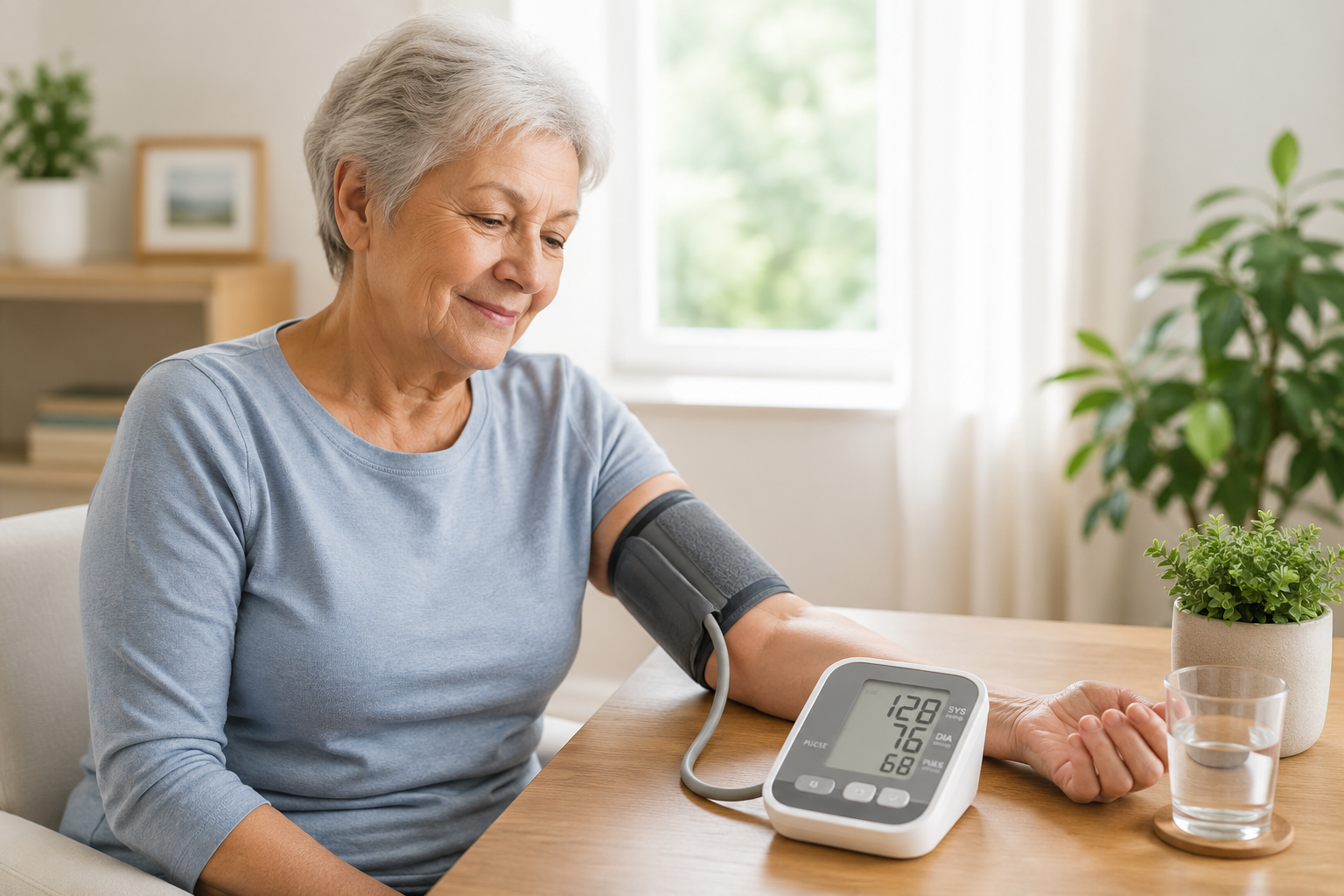
Simple wellness tools that may help with weight tracking, blood pressure awareness, and everyday routines.
As an Amazon Associate, Tools.60AndOver.net may earn from qualifying purchases.
A BMI from 18.5 to 24.9 is generally considered the healthy adult range. For women over 60, BMI can be a useful starting point, but it should not be treated as the full picture of health.
Changes in muscle, bone density, menopause-related body composition, medications, appetite, and activity level can all affect how BMI should be interpreted.
BMI does not directly measure body fat, muscle, waist size, bone density, strength, or fitness. Two women can have the same BMI but very different health profiles.
Use this tool as a general guide. If your weight changed quickly, your appetite changed, or your result concerns you, consider checking with a qualified healthcare professional.
Standard adult BMI categories are generally used for adults age 20 and older. However, women over 60 may need extra context because BMI does not directly measure body fat, muscle, waist size, bone density, or strength.
A BMI from 18.5 to 24.9 is generally considered the healthy adult range. Personal goals may vary based on body composition, waist size, strength, bone health, medical history, and professional guidance.
Yes. BMI can be misleading when someone has low muscle mass, higher muscle mass, height loss, posture changes, fluid changes, or other health factors that affect weight.
No. BMI is only one screening measure. Waist measurement, blood pressure, lab work, strength, nutrition, bone health, balance, and medical history can all add important context.
Disclosure: As an Amazon Associate, we earn from qualifying purchases at no extra cost to you.